Epstein Files Explained: What They Are, What Was Released, and Why It Matters
Who Was Jeffrey Epstein?
Jeffrey Epstein was a wealthy financier who became the center of one of the most controversial criminal cases in modern history. He was accused of running a long-term sex trafficking operation involving underage girls.
Epstein was arrested in 2019 and later died in jail while awaiting trial, a death officially ruled as suicide. His case, however, did not end there.
What Are the Epstein Files?
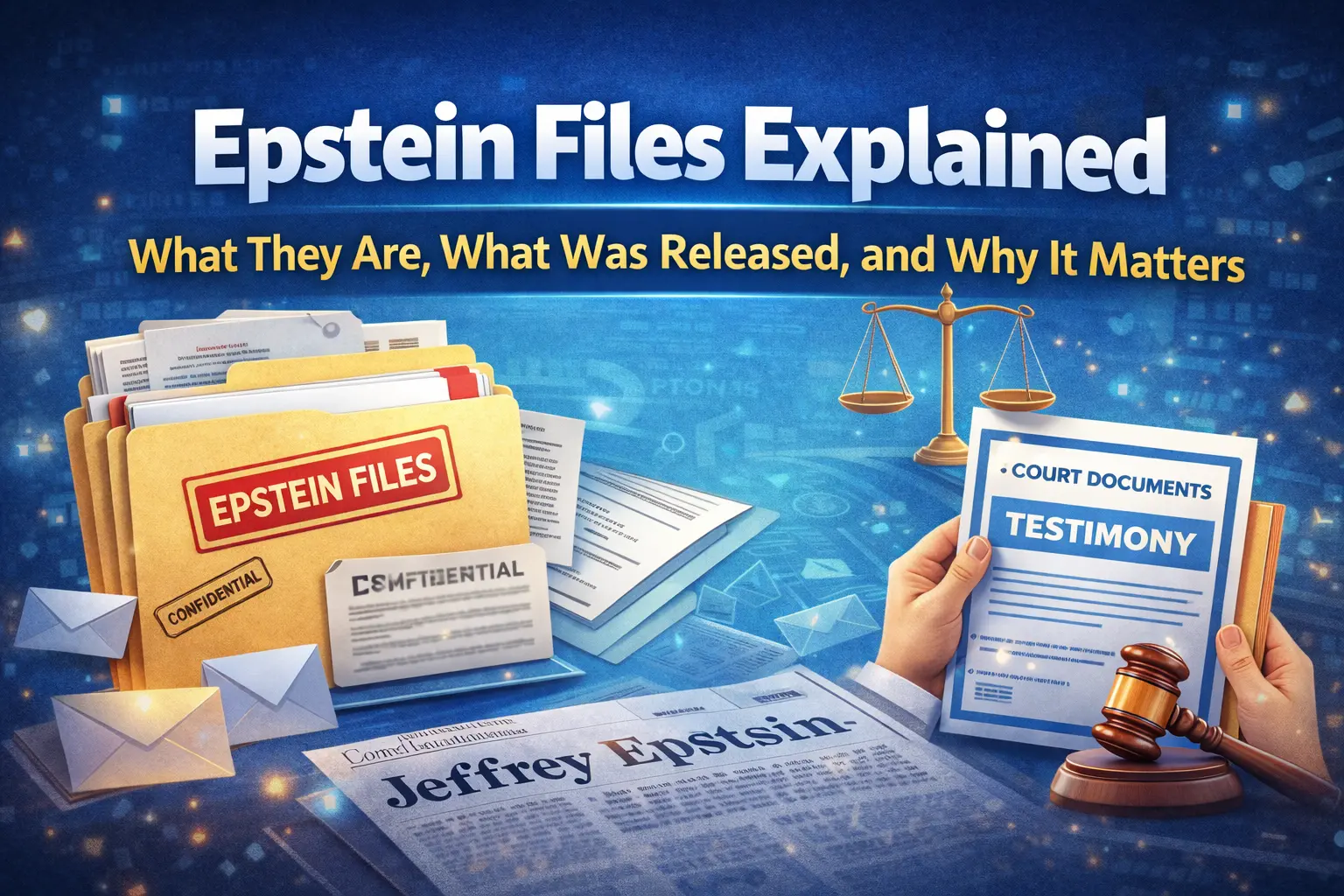
The Epstein files refer to a large collection of:
- Court documents
- Civil lawsuit filings
- Witness testimonies
- Email records and contact lists
- Evidence unsealed by court order
Most of these files originate from civil cases filed by Epstein’s victims, not criminal trials.
Why Were the Epstein Files Sealed Initially?
Many documents were sealed to:
- Protect victims’ identities
- Avoid interference with ongoing investigations
- Prevent defamation of individuals not formally charged
U.S. courts frequently seal sensitive material until legal standards for disclosure are met.
Why Were the Epstein Files Released?
Some Epstein-related documents were later unsealed by court order following public interest requests and legal motions.
The goal of unsealing was to:
- Increase transparency
- Allow public scrutiny
- Uphold freedom of information principles
Importantly, being named in the files does not mean someone is guilty.
What Do the Epstein Files Contain?
The released files typically include:
✔ Testimony Mentions
Names mentioned during sworn depositions or interviews.
✔ Flight Logs & Associations
Records showing who interacted with Epstein socially or professionally.
✔ Legal Allegations
Claims made by accusers during civil cases — not criminal convictions.
✔ Supporting Documents
Emails, schedules, and financial references tied to court filings.
Common Misunderstandings About the Epstein Files
❌ “Everyone named is guilty”
False. Being mentioned is not proof of wrongdoing.
❌ “The files are a secret list”
Incorrect. They are legal records from civil proceedings, not a hidden database.
❌ “All information is verified fact”
Testimony is not the same as a proven court judgment.
Legal Context: Allegations vs Convictions
It’s important to understand the difference:
| Term | Meaning |
|---|---|
| Allegation | A claim made, not yet proven |
| Deposition | Sworn testimony |
| Unsealed Document | Made public by court |
| Conviction | Proven guilt in court |
Most Epstein files fall under allegations, not convictions.
Why the Epstein Files Matter
The Epstein files highlight:
- How power and wealth can influence justice
- The importance of survivor testimony
- Systemic failures in accountability
- The role of transparency in public trust
They also sparked global discussions around abuse, consent, and legal reform.
Media Coverage and Public Interest
Major news outlets worldwide have covered the Epstein files due to:
- High-profile names appearing in testimony
- Questions around elite accountability
- Ongoing civil cases linked to Epstein’s network
Search trends spike whenever new documents are released or referenced.
Are More Epstein Files Expected?
Some related cases and document reviews are still ongoing.
This means additional records may be released in the future, subject to court decisions and privacy laws.
However, release does not automatically imply criminal charges.
Final Thoughts: Facts Matter More Than Speculation
The Epstein files are complex legal documents—not viral checklists or entertainment gossip.
Understanding them requires:
- Legal context
- Critical thinking
- Respect for due process
Separating facts from assumptions is essential for informed discussion.